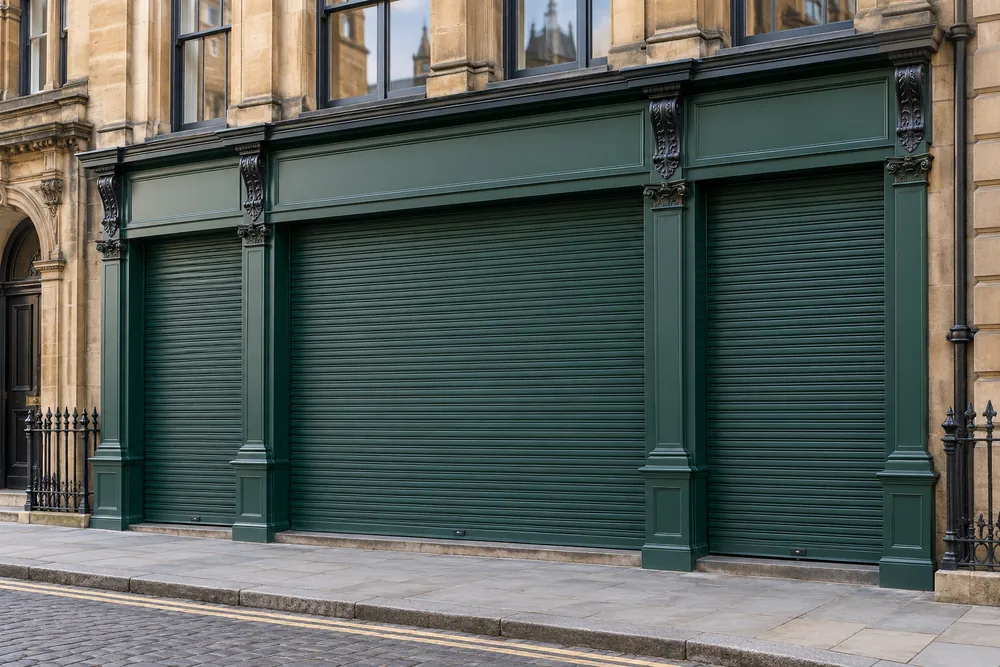
Commercial roller shutters protect shopfronts, trade counters, stockrooms and service entrances without taking up the swing space of a hinged door. In Leeds, the right specification needs to balance appearance, access, daily operation and the building fabric. A compact shutter arrangement can still require careful work around signage, lighting and existing glazing.
We handle enquiries for new commercial shutters, replacement curtains and changes to existing arrangements. Tell us whether the shutter sits inside or outside the glazing, who uses it and what needs to remain visible when the premises close. These details influence the curtain, guides and controls.
Choose The Curtain And Operation Together
Solid steel curtains provide a closed visual barrier, while perforated arrangements can retain some view into a display. Insulated profiles may suit heated commercial spaces, but performance depends on the complete installed opening, including perimeter seals. A shutter is not automatically a fire-resisting product simply because its curtain is metal.
Manual operation can suit some smaller openings, subject to the weight and duty of the assembly. Powered operation can make larger or frequently used entrances more practical. The controls and protective devices must suit the people using the door and the possibility of other people entering its path.
The survey should record clear opening dimensions, headroom, side room, substrate and safe maintenance access. Existing brickwork, glazing supports and services can all affect fixing positions. Final manufacturing dimensions should follow a competent survey rather than measurements sent with an initial enquiry.
Think Beyond The Shopfront
Check that closing the shutter leaves the agreed entry routes and emergency exits usable. Discuss where keys or controls will be held, who can operate the shutter and how the opening behaves during a power failure. Do not assume an electrically powered shutter is suitable as the only way out of an occupied space.
External shutters or visible alterations may need planning or landlord consent, particularly on sensitive commercial frontages. Check the relevant permissions before ordering. A product drawing and proposed finish can help the property owner or local authority understand the intended change.
From Enquiry To Handover
Describe The Requirement
Send the postcode, door type and a brief description of the issue or project. Mention operating hours, delivery access and any restrictions that would affect a survey. Initial photographs should be taken without entering a hazardous area.
Assess The Opening
A competent assessment should establish dimensions, equipment condition, supports and the way people use the opening. It should also identify the access equipment and isolation arrangements needed for the proposed work.
Review The Proposal
Agree the scope, exclusions, programme and quotation before work starts. Check who is responsible for electrical supplies, building preparation and temporary access arrangements so the job can be coordinated with normal operations.
Test And Record
The completed work should be checked for safe operation and the relevant records supplied. Ask for instructions covering normal use and fault reporting, together with any maintenance requirements and outstanding actions.
Safety And Relevant Requirements
Workplace doors must be safely constructed and maintained under the Workplace (Health, Safety and Welfare) Regulations 1992, including Regulations 5 and 18. Upward-opening doors need protection against falling back, and powered doors need effective protection against trapping. Read the HSE workplace guidance.
BS EN 12453 addresses safety in use of powered doors, while BS EN 13241 addresses product performance for industrial and commercial doors. Standards inform the assessment but do not replace consideration of the actual risks at the opening. The applicable obligations and documents depend on the equipment and the work being undertaken, as explained in HSE guidance on door standards.
What Goes Into Your Door Quotation?
Commercial shutter costs vary with opening size, curtain construction, finish, drive and control choice. Restricted access, structural preparation, electrical work and removal of an existing assembly can change the installation scope. A useful quotation separates the shutter equipment from building work and other responsibilities.
Before approving an order, check what drawings and finish samples are included and how deliveries will be managed. Agree the installation sequence with your facilities team or managing agent. The programme should account for periods when the opening will be unavailable and how it will be secured between work stages.
Your Questions Answered
Can A Shutter Keep A Display Visible?
A commercial shutter can retain some display visibility when a suitable perforated or open design is selected. The result depends on the curtain pattern, lighting and viewing distance. Discuss security expectations with the property manager or insurer before choosing a curtain, because appearance and resistance to forced entry are different requirements.
Do New Shutters Need An Electrical Supply?
Powered commercial shutters need a suitable electrical supply and an agreed isolation arrangement. The survey should confirm where the supply will terminate and who will complete electrical work. Some smaller shutters may be suitable for manual operation, but selection must account for the size, weight and expected frequency of use.