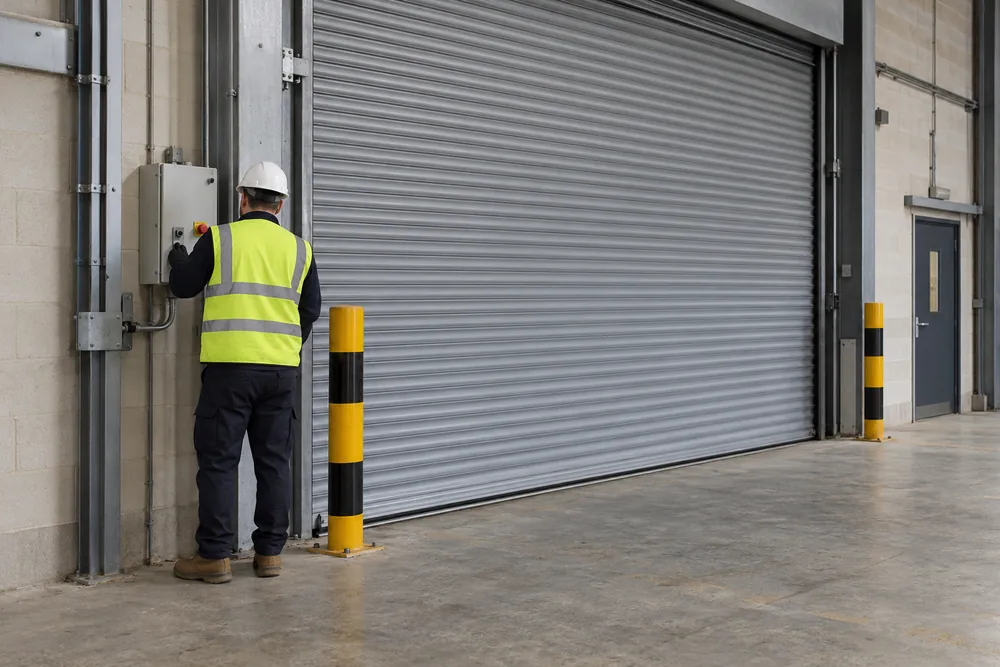
Industrial door maintenance gives facilities teams a structured way to manage wear and record defects before an opening becomes unreliable. A warehouse door used throughout a shift faces different demands from an occasional access shutter. We cover planned servicing enquiries for commercial roller shutters and industrial doors across Leeds.
A useful maintenance plan begins with an equipment list, manufacturer information and an understanding of the risks at each opening. Tell us how many doors are involved, which types are fitted and whether any faults are already known. Existing service records can help identify repeat problems and missing information.
A Service Must Check More Than Movement
A door that travels from top to bottom can still have damaged supports or a failed safety function. Depending on the assembly, the service scope may cover curtains or panels, guides, rollers, hinges, cables, drive mountings, limits, seals and controls. Safety edges and protective sensing equipment need checks appropriate to the design.
The inspection should distinguish adjustment, wear and defects that make continued use unsafe. A service record should identify the opening, describe what was checked and state any restrictions or follow-up work. A sticker on the frame is not a substitute for an intelligible record of findings.
Cleaning and lubrication must follow the manufacturer's instructions. Applying a general lubricant to every visible surface can attract dirt or damage components. Staff should report unusual noise, uneven movement, impact and damaged controls rather than try to tune the mechanism themselves.
Set Intervals From Risk And Use
There is no single service interval that suits every industrial door. The programme should reflect the manufacturer's instructions, operating cycles, exposure, impact risk and the findings from earlier visits. Frequent use or a harsh environment can justify closer attention than a lightly used protected opening.
Arrange access to the controls and safe working space before the visit. Where isolation affects production or security, agree an alternative route and the people authorised to take equipment out of use. A dangerous door should remain unavailable until the relevant safety concerns have been resolved.
From Enquiry To Handover
Describe The Requirement
Send the postcode, door type and a brief description of the issue or project. Mention operating hours, delivery access and any restrictions that would affect a survey. Initial photographs should be taken without entering a hazardous area.
Assess The Opening
A competent assessment should establish dimensions, equipment condition, supports and the way people use the opening. It should also identify the access equipment and isolation arrangements needed for the proposed work.
Review The Proposal
Agree the scope, exclusions, programme and quotation before work starts. Check who is responsible for electrical supplies, building preparation and temporary access arrangements so the job can be coordinated with normal operations.
Test And Record
The completed work should be checked for safe operation and the relevant records supplied. Ask for instructions covering normal use and fault reporting, together with any maintenance requirements and outstanding actions.
Safety And Relevant Requirements
Workplace doors must be safely constructed and maintained under the Workplace (Health, Safety and Welfare) Regulations 1992, including Regulations 5 and 18. Upward-opening doors need protection against falling back, and powered doors need effective protection against trapping. Read the HSE workplace guidance.
BS EN 12453 addresses safety in use of powered doors, while BS EN 13241 addresses product performance for industrial and commercial doors. Standards inform the assessment but do not replace consideration of the actual risks at the opening. The applicable obligations and documents depend on the equipment and the work being undertaken, as explained in HSE guidance on door standards.
What Goes Into Your Door Quotation?
Maintenance costs depend on the number and type of doors, access conditions, usage and the agreed scope of testing. A planned visit may identify parts or repairs that are outside the service charge. Ask how additional work will be authorised and whether safety-critical findings will be reported immediately.
For a portfolio of premises, a consistent door reference helps connect quotations, service records and repair history. Ask for records that your facilities team can retain and retrieve. Clear identification is especially useful when doors look similar or maintenance responsibilities are split between tenants and landlords.
Your Questions Answered
How Often Should Industrial Doors Be Serviced?
Industrial door servicing intervals should follow the manufacturer’s instructions and a risk assessment that considers use, environment and previous defects. A fixed annual visit is not automatically suitable for every door. Review the programme when use changes, after significant damage or when inspection findings indicate faster deterioration of important components.
What Records Should A Service Visit Produce?
An industrial door service record should identify the door, the checks completed, the findings and any action required. It should distinguish completed adjustments from outstanding repairs and state any restrictions on use. Keep the record with the equipment information so the next competent person can review the history before starting work.