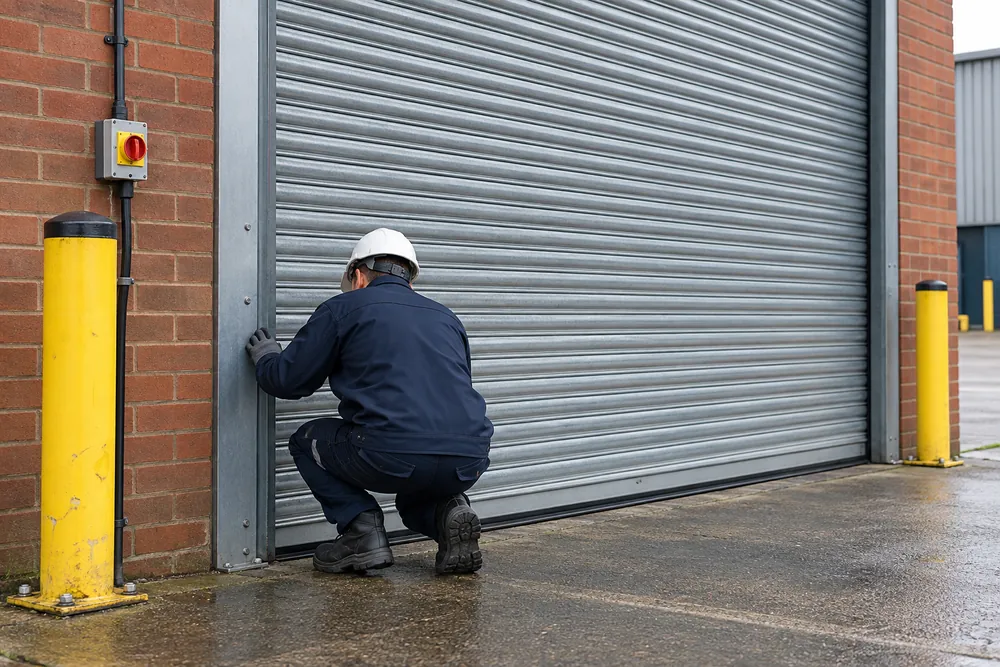
A shutter that stops halfway, drops unevenly or refuses to close creates more than an access problem. It can expose stock, interrupt deliveries and put people close to moving or unsupported equipment. Our roller shutter repair enquiries cover commercial premises across Leeds, from retail entrances to warehouse access doors.
Tell us what happened immediately before the fault, whether the opening can be secured and whether the shutter is manual or powered. A photograph taken from a safe position and the equipment reference can help establish what needs investigating. Do not repeatedly operate a struggling door to demonstrate the problem.
Find The Fault Before Replacing Parts
A distorted curtain may follow vehicle impact, while a door that runs out of alignment may have damaged guides or worn suspension components. A motor that hums without moving the shutter needs a different investigation from an unresponsive control station. The engineer should distinguish an electrical supply issue from a mechanical obstruction before recommending replacement parts.
Inspection can include curtain slats, end locks, guides, barrel support, drive arrangements, fixings and controls. A repair proposal should identify the failed parts and any connected safety defects. Replacing a visible damaged slat without checking the guides can leave the underlying problem unresolved.
Where springs, shafts or suspended components are involved, stored energy makes improvised repairs unsafe. Staff should keep the opening clear and follow the site isolation procedure. Never release brakes, remove covers or attempt to lift a damaged shutter with a forklift.
Report The Fault Safely
Record whether the door is open, closed or suspended between positions. Note unusual noise, visible impact marks and any warning indications without touching the mechanism. If the shutter is unstable or its safety devices have failed, restrict access and keep it out of use pending assessment.
If an opening cannot be secured, describe the security exposure in the enquiry. A temporary measure needs to respect escape routes and the building fire strategy. A shutter must not be propped up or left operating simply because deliveries are expected.
From Enquiry To Handover
Describe The Requirement
Send the postcode, door type and a brief description of the issue or project. Mention operating hours, delivery access and any restrictions that would affect a survey. Initial photographs should be taken without entering a hazardous area.
Assess The Opening
A competent assessment should establish dimensions, equipment condition, supports and the way people use the opening. It should also identify the access equipment and isolation arrangements needed for the proposed work.
Review The Proposal
Agree the scope, exclusions, programme and quotation before work starts. Check who is responsible for electrical supplies, building preparation and temporary access arrangements so the job can be coordinated with normal operations.
Test And Record
The completed work should be checked for safe operation and the relevant records supplied. Ask for instructions covering normal use and fault reporting, together with any maintenance requirements and outstanding actions.
Safety And Relevant Requirements
Workplace doors must be safely constructed and maintained under the Workplace (Health, Safety and Welfare) Regulations 1992, including Regulations 5 and 18. Upward-opening doors need protection against falling back, and powered doors need effective protection against trapping. Read the HSE workplace guidance.
BS EN 12453 addresses safety in use of powered doors, while BS EN 13241 addresses product performance for industrial and commercial doors. Standards inform the assessment but do not replace consideration of the actual risks at the opening. The applicable obligations and documents depend on the equipment and the work being undertaken, as explained in HSE guidance on door standards.
What Goes Into Your Door Quotation?
Repair cost depends on the type and extent of damage, the availability of compatible parts and the access needed to reach the mechanism. A curtain repair, replacement drive and structural fixing repair involve different work. Ask whether investigation, parts, access equipment, testing and removal of damaged materials are included.
A replacement may be more sensible where several major components are worn or the original arrangement cannot be made safe without extensive changes. We want the quotation to explain the repair option alongside any replacement recommendation. Availability and attendance arrangements must be confirmed for the individual enquiry.
Your Questions Answered
Can A Damaged Shutter Be Repaired?
A damaged roller shutter can often be repaired when compatible parts are available and the surrounding structure remains sound. An assessment should check the curtain, guides, drive and safety functions together. Extensive distortion or repeated component failures may make replacement more practical, so ask for the reasons behind the proposed approach.
Can Staff Manually Lift A Stuck Shutter?
A stuck shutter should not be manually lifted unless its instructions allow it and a competent person has confirmed the procedure is safe. Damage can affect balance and support, leaving the curtain liable to move unexpectedly. Keep staff clear, stop repeated operation and describe the position of the door when requesting help.